






 Industrial
 School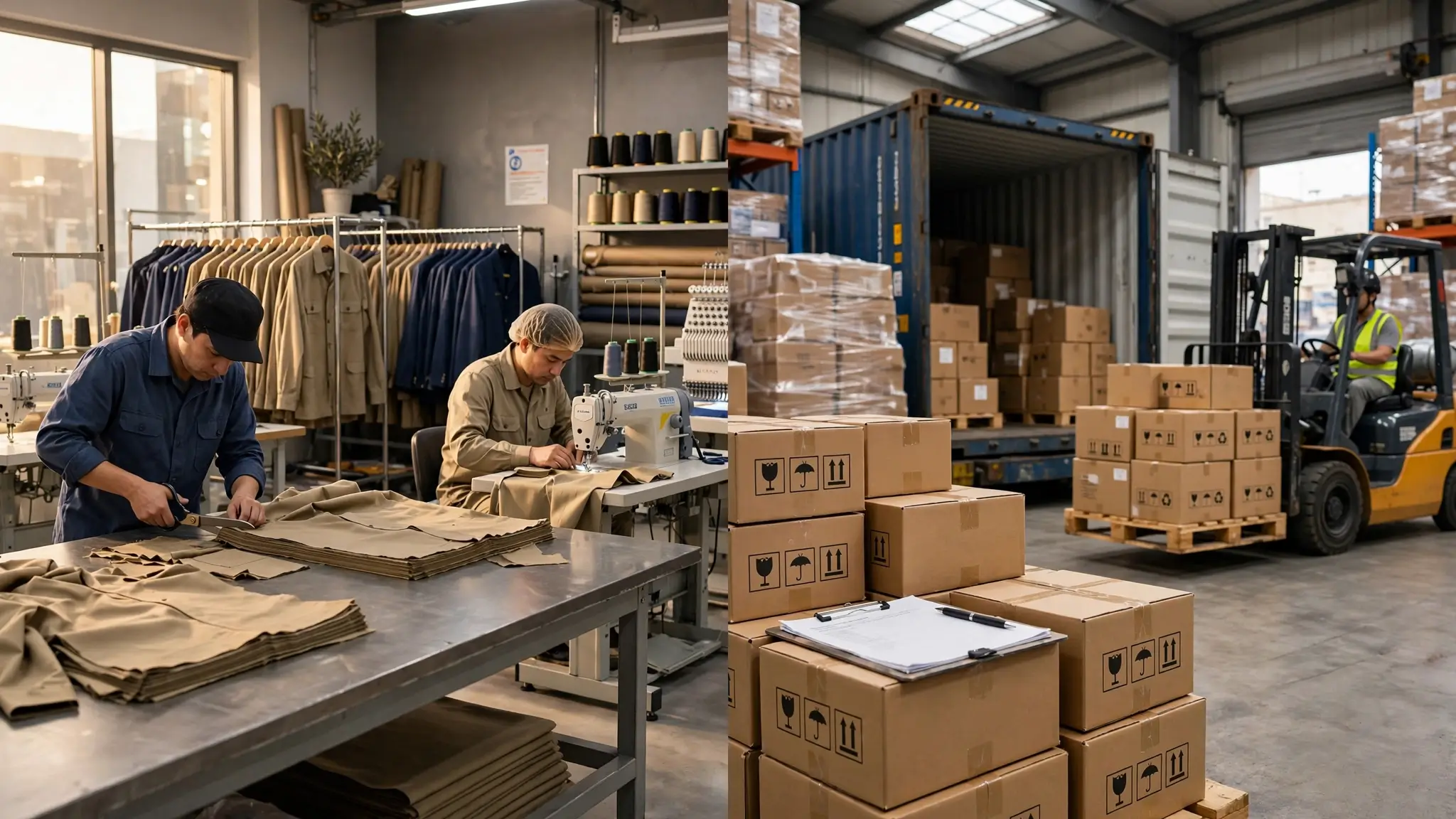
When a UAE business requests uniform quotes, one number often shocks the finance team: two suppliers, same specification, prices apart by 20–40%. The gap almost always comes down to one structural difference — whether you’re buying from an in-house manufacturer or an importer/reseller. Understanding this difference is the single biggest lever UAE businesses have over their uniform budget.
With 14+ years manufacturing uniforms in-house for 500+ UAE businesses, we’ve quoted against importers and resellers more times than we can count. This guide breaks down exactly where the cost difference comes from, what you’re trading off at each price point, and how to decide which model fits your business.
Why In-House Manufacturer vs Importer Uniform Cost UAE Differs So Much
Where an Importer/Reseller’s Cost Comes From
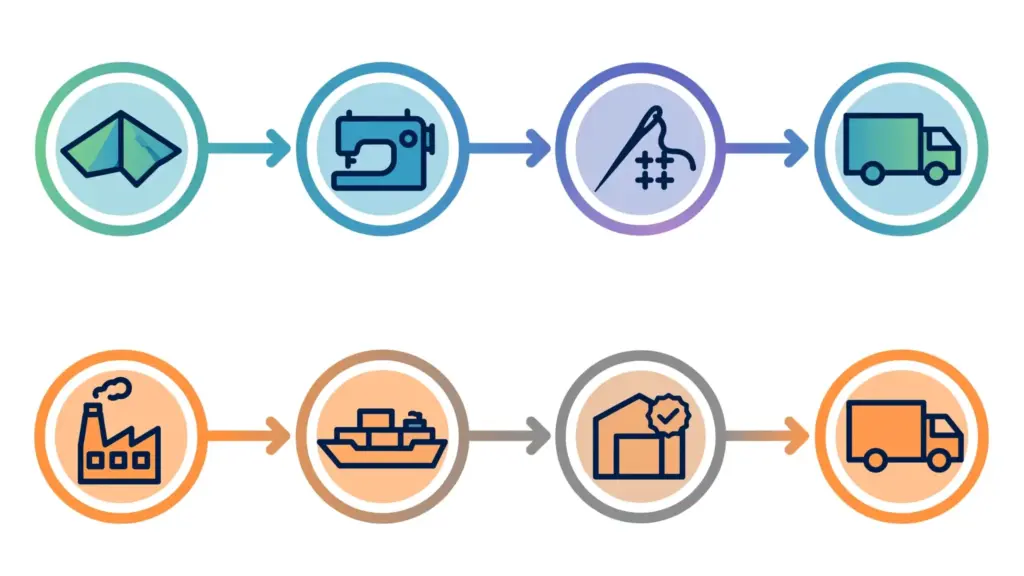
An importer or reseller sources finished garments — usually from overseas factories — then adds shipping, customs duty, warehousing, and a resale margin before quoting you. Each layer is largely outside their control: freight rates, customs classification, and currency shifts all move independently of the supplier’s own pricing decisions.
Where an In-House Manufacturer’s Cost Comes From
An in-house manufacturer controls fabric sourcing, cutting, stitching, embroidery, and quality control under one roof in the UAE. There’s no import margin, no freight markup, and no reseller layer — the quote reflects production cost plus a single margin. Changes like size corrections, late additions, or urgent reorders don’t require reopening an international shipment.
Lead Time as a Hidden Cost
Importers typically quote 4–8 weeks depending on origin country and customs clearance — a real cost when a business needs uniforms before a launch, a new hire cohort, or a school term start. In-house manufacturers working locally can typically turn around standard orders in 7–14 working days, with express options.
Side-by-Side Cost Comparison
| Factor | In-House Manufacturer (UAE) | Importer / Reseller |
|---|---|---|
| Pricing structure | Single production margin | Factory cost + freight + customs + resale margin |
| Lead time | 7–14 working days | 4–8 weeks |
| Mid-order changes | Fast, handled locally | Slow, tied to shipment schedule |
| Quality control | Direct, at every stage | Dependent on overseas factory |
| Customization | Flexible, on-site | Often limited to catalog |
| Bulk discount | Often deeper | Limited by fixed landed cost |
| After-sales support | Local, fast | Slower, stock-dependent |
When an Importer/Reseller Might Still Make Sense
Resellers aren’t automatically the wrong choice. If a business needs a very specific branded product only available from one overseas factory, or is placing a small one-off order where local customization isn’t a priority, a reseller catalog can work — the trade-off is less control over cost, timeline, and mid-order flexibility.
Our Experience — Comparing Costs for UAE Clients
Working directly with UAE procurement teams, the pattern is consistent: businesses that switch from an importer to an in-house manufacturer for ongoing uniform needs (hospitality groups, schools, corporate offices) typically see a lower landed cost per piece and far fewer delays around growth-driven or urgent reorders — see our school uniform budgeting guide for a related example. The biggest surprise for finance teams usually isn’t the price gap itself — it’s how much of an importer’s quote is freight and customs rather than actual garment cost.
Because we manufacture directly in Abu Dhabi, we offer transparent, itemized quotes rather than bundled landed-cost estimates.
How to Decide: In-House Manufacturer or Importer
- Calculate total landed cost, not just the quoted unit price — ask importers to break out freight, customs, and margin separately.
- Factor in reorder frequency — high turnover or growing headcount favors an in-house manufacturer’s faster turnaround.
- Weigh customization needs — specific embroidery, fabric, or fit requirements favor in-house flexibility.
- Consider currency and freight volatility — import pricing can shift between quote and delivery; local pricing is more stable.
Frequently Asked Questions
Is in-house manufacturing always cheaper than importing uniforms in UAE?
Not always for small or highly specialized one-off orders, but for ongoing bulk needs, in-house manufacturing usually removes the freight, customs, and reseller margin layers that drive up importer pricing.
Why do importer uniform quotes take longer to deliver?
The product is manufactured overseas first, then shipped and cleared through customs — a process that typically adds several weeks compared to local in-house production.
Can I get the same customization from an importer as an in-house manufacturer?
Usually not to the same degree — importers work from a fixed catalog, while in-house manufacturers can adjust embroidery, sizing, and fabric on-site.
What’s the minimum order quantity difference between the two models?
In-house manufacturers can often accommodate smaller minimums (as low as 10 pieces), while importers are bound by the overseas factory’s own MOQ.
Does buying from an in-house manufacturer support UAE-based businesses?
Yes — production, staff, and materials sourcing stay within the local economy, which is increasingly relevant as businesses track local content and supply chain priorities under initiatives like Make it in the Emirates.
Conclusion
The real difference between an in-house manufacturer and an importer/reseller isn’t just the number on the quote — it’s how that number is built, how fast it can move, and how much flexibility you keep. For most UAE businesses with ongoing or bulk needs, in-house manufacturing offers a more transparent, faster, and often lower total cost. Get a free, itemized quote from 247 Uniforms in 24 hours.







Add comment